Data Flow
Define which information must move, in which direction and at what point in the process.

Connect AI tools and digital platforms only where they improve real workflows. We assess your CRM, ERP, website and other systems, plan secure integration requirements and coordinate technical specialists.
We plan and coordinate integrations between CRM, ecommerce, ERP, support, marketing, analytics, AI tools and internal applications using APIs, connectors and automation layers.
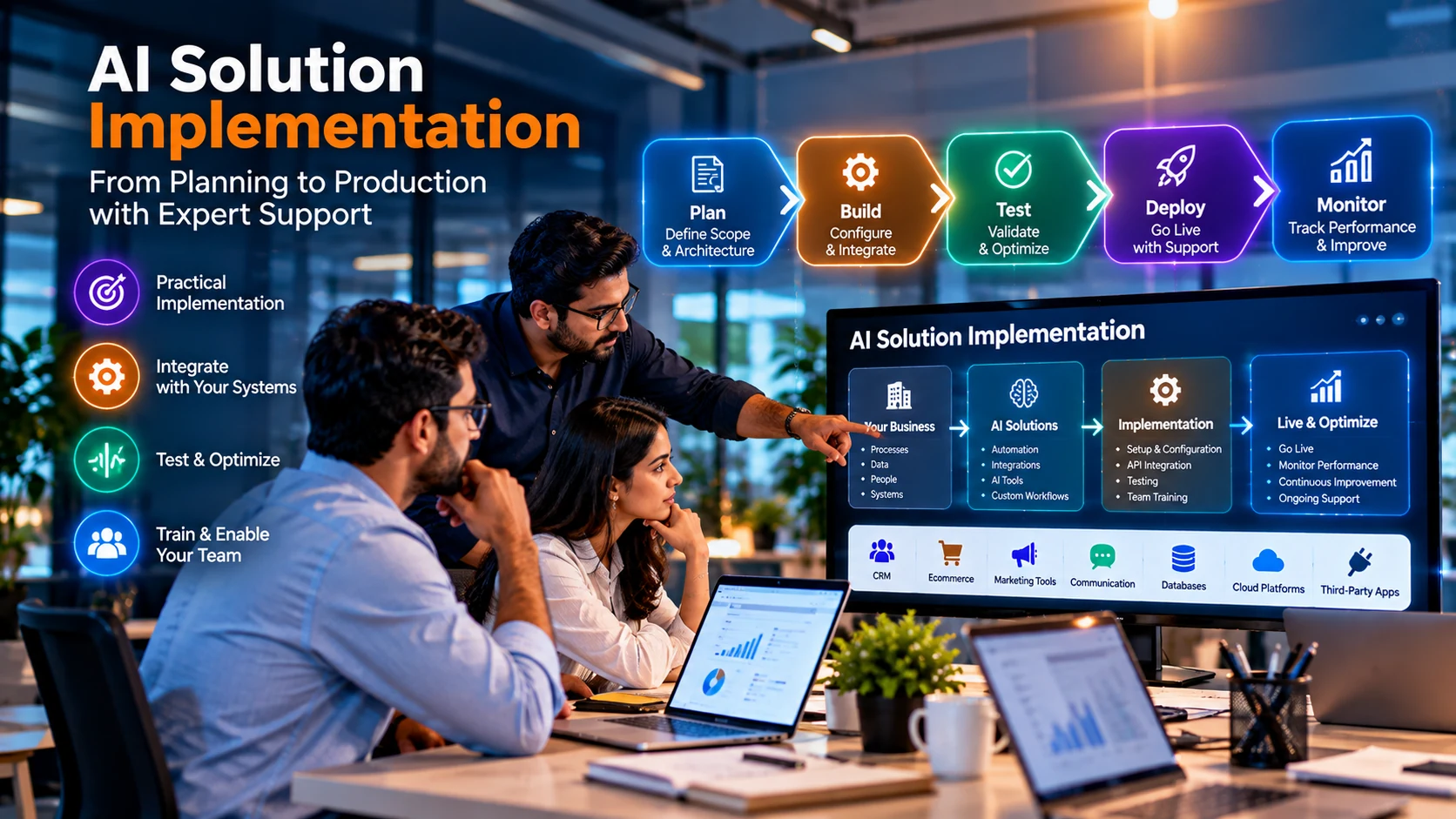
Implementation combines technology, process, ownership and adoption rather than treating delivery as a standalone technical task.
Define which information must move, in which direction and at what point in the process.
Choose the appropriate API, native connector, webhook or middleware approach.
Design error handling, retries, logging and monitoring around important integrations.
Clarify system ownership, data responsibility and ongoing support requirements.
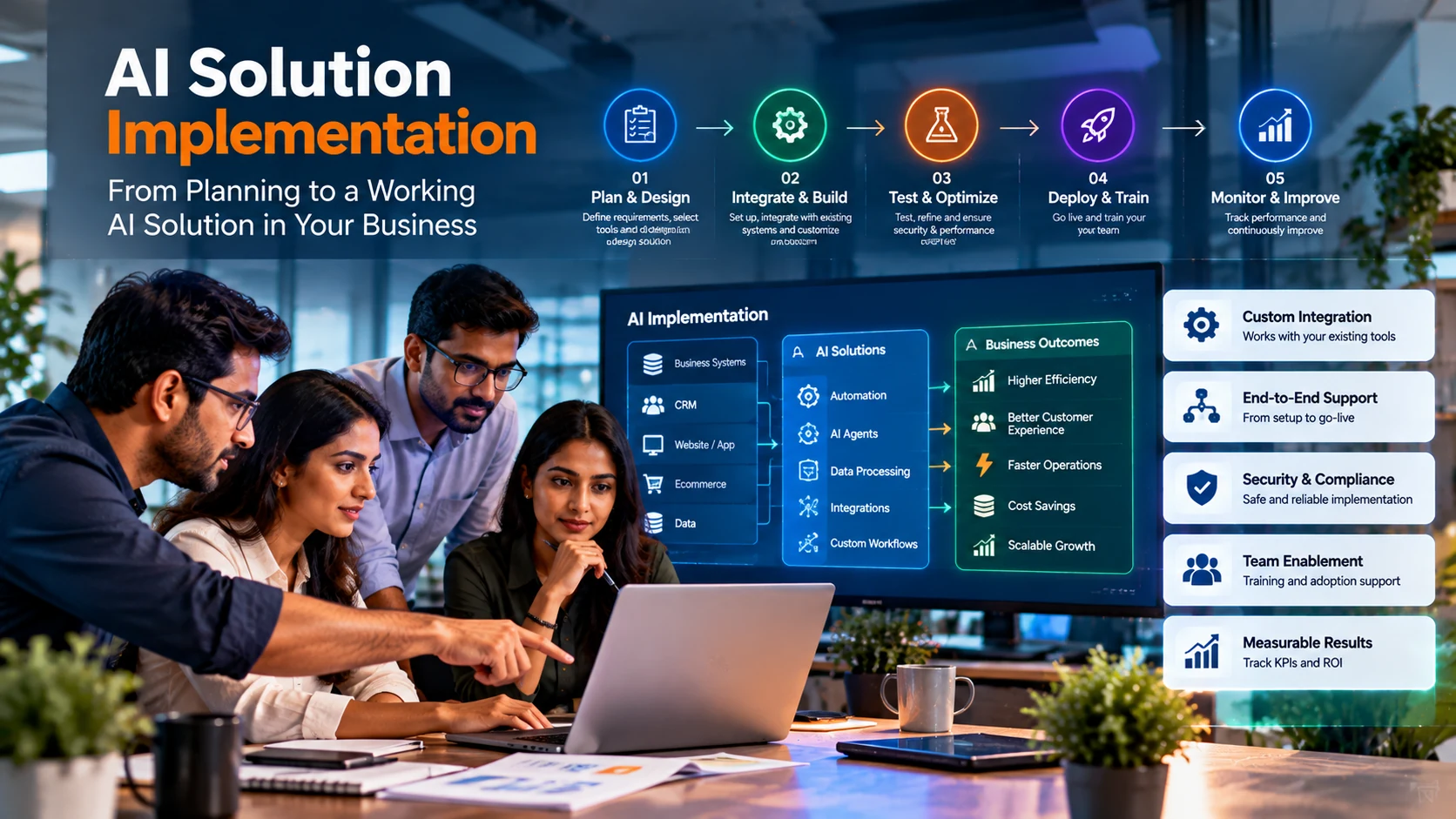
Connecting two applications is only useful when the resulting data flow supports the real operating process. We map the business event first, then design the technical connection around it.
A structured implementation path from business requirements to reliable operational use.
Document systems and required data movement.
Choose the integration pattern.
Configure APIs, connectors or middleware.
Validate data, errors and reliability.
Maintain visibility and operational ownership.
Clear outputs that align leadership, internal teams and implementation partners.
A practical output designed for implementation, management review and ongoing improvement.
A practical output designed for implementation, management review and ongoing improvement.
A practical output designed for implementation, management review and ongoing improvement.
A practical output designed for implementation, management review and ongoing improvement.
A practical output designed for implementation, management review and ongoing improvement.
A practical output designed for implementation, management review and ongoing improvement.
The goal is dependable implementation and measurable business value.

Combine implementation with the strategy, automation and data capabilities required for your business.
Use this capability inside a connected business systems roadmap based on your current business stage and priorities.
Yes. We can define requirements, coordinate implementation and work alongside internal business and technology teams.
Yes. Vendor coordination is a core part of our model when specialist implementation skills or existing technology partners are involved.
No. We prefer to reuse suitable systems and introduce change only where the current environment materially blocks the required outcome.
Yes. Phased implementation is often preferable because it allows the business to validate value, adoption and reliability before expanding.
Success measures are agreed around the business outcome and may include implementation quality, adoption, workflow performance, reliability, cost, productivity and revenue or customer KPIs.
Start with clear requirements, ownership and an implementation path aligned with the business.