
How to Build a Digital Business in India
A successful digital business needs more than a website or app. It requires a clear business model, a defined customer journey, connected systems, measurable revenue logic and a practical launch plan.
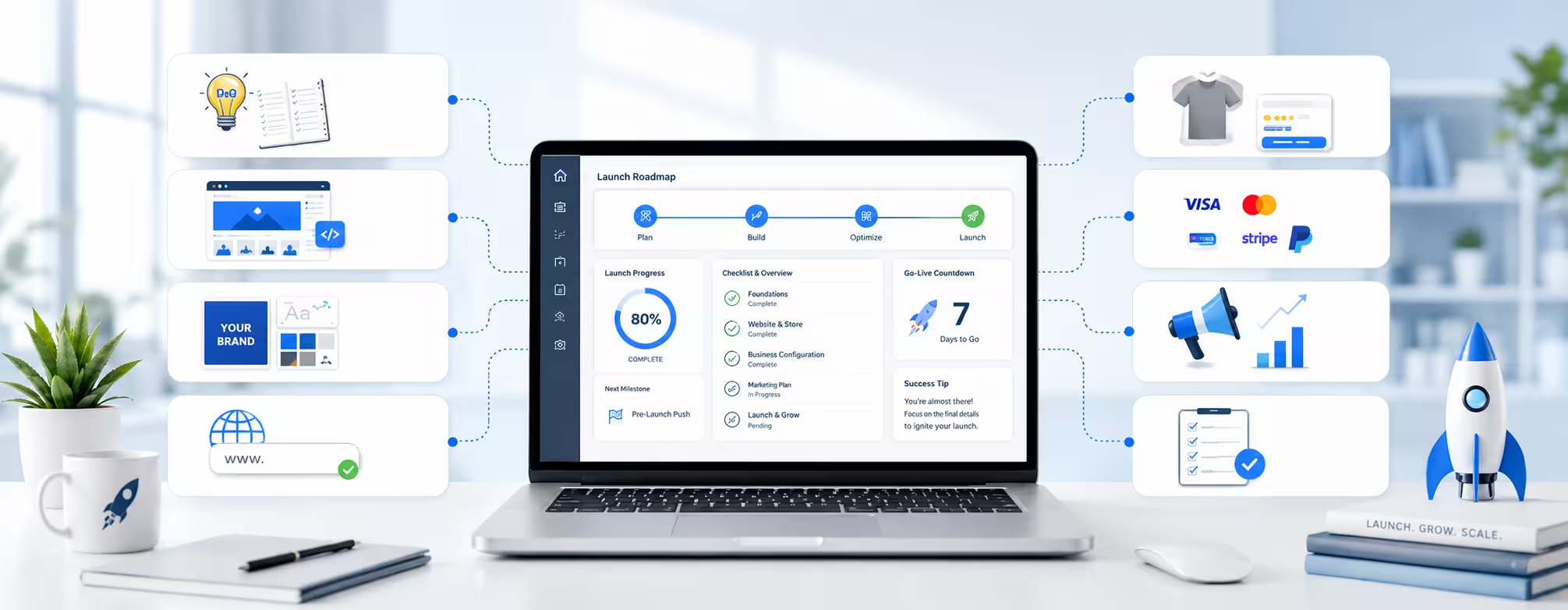
A Digital Business Is a System, Not Just a Website
A website, app or ecommerce store is only the visible layer of a digital business. Behind it sits the real business system: customer acquisition, lead or order capture, payment, onboarding, service delivery, support, retention, reporting and operations.
Building these pieces in the correct order reduces wasted development and makes future scaling easier.
1. Define the Customer Problem and Target Segment
Start with a specific customer and a clear problem. Avoid trying to serve everyone at launch. A focused customer segment makes positioning, pricing, marketing and product decisions easier.
- Who is the first customer segment?
- What recurring problem are they trying to solve?
- How do they solve it today?
- Why would they switch to your offer?
2. Choose the Right Digital Business Model
The model determines how the business earns and how technology should be designed. Common models include ecommerce, marketplace, subscription, SaaS, lead-generation platform, service marketplace, licensing and digital services.
Choose the model based on customer behavior, margin, operational complexity and the capabilities you can realistically manage.
3. Define the Revenue Engine
Before development, document how money moves through the business. Define pricing, gross margin, acquisition assumptions, payment flow, refunds, commissions if applicable and recurring revenue opportunities.
4. Map the Customer Journey
Write the customer journey from first discovery to repeat purchase or renewal. This reveals what pages, messages, forms, notifications, automations and internal actions are actually required.
Designing the journey before selecting tools prevents disconnected systems later.

5. Select Technology Around the Business
Choose technology only after the process is clear. Depending on the model, you may need a website or app, ecommerce platform, CRM, payment gateway, support system, analytics, automation and integrations.
The best stack is not the one with the most features. It is the one your team can operate and improve.
6. Build a Minimum Viable Business System
Launch the smallest version capable of delivering the core promise and collecting real customer feedback. Avoid building every future feature in version one.
- Core offer and customer journey
- Payment or lead capture
- Basic CRM and follow-up
- Operations workflow
- Essential reporting
7. Create the Go-to-Market Plan
Identify the first channels you can execute consistently. Depending on your audience, this may include search, social, WhatsApp, partnerships, outbound, content, marketplaces or communities.
Connect marketing activity with a defined sales or conversion process so leads do not disappear after acquisition.
8. Measure and Improve After Launch
Track acquisition, conversion, order or deal value, retention, customer feedback, support issues and operational bottlenecks. Use those signals to decide what to improve next.
Final Takeaway
The strongest digital businesses are built by connecting business model, customer journey, technology, operations and data. Start with clarity, launch in phases and let real business outcomes guide future development.
Apply These Ideas to Your Business
Move from insight to implementation with the solution that fits your current business stage.
Need help turning this into a practical implementation plan?
We connect business strategy, digital systems, AI, automation and data with clear implementation priorities.
